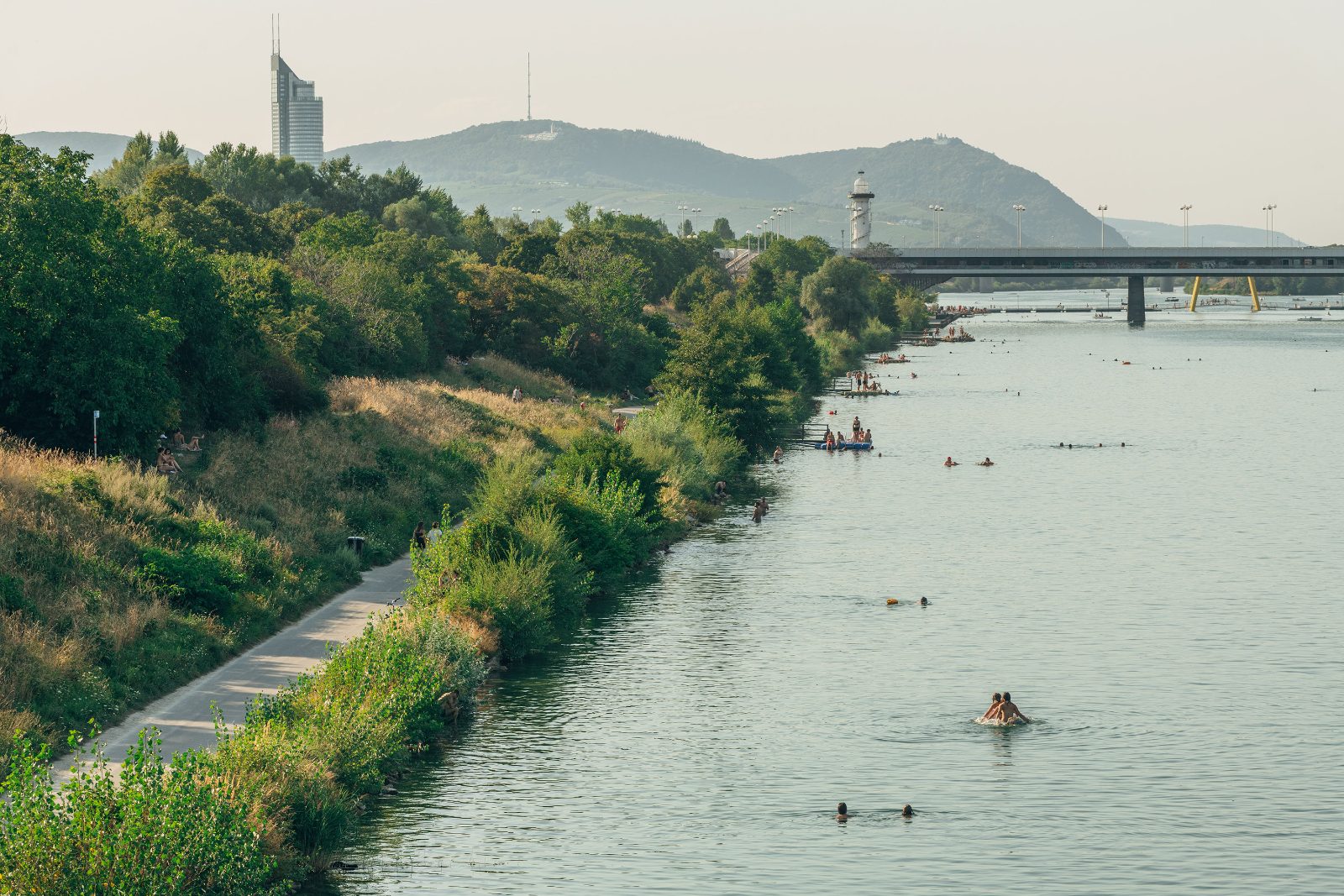
Donauinsel
5 min walk
This long, narrow island in the Danube offers paved paths and green spaces suitable for a walk before boarding your cruise.
Vienna's Danube fleet does not board in the old town. The city's passenger quay sits north-east of the centre at Handelskai, facing the Donauinsel, and it is working infrastructure rather than a showpiece. This vienna river cruise port terminal guide sets out where the site is, what it contains, and how boarding is organised along the kai.
Quick answer
Vienna's river cruise port terminal stands at Handelskai 265, 1020 Vienna, on the Danube opposite the Donauinsel. The public terminal area opens 00:00–23:59 every day and entry is free, though cruise access depends on the ticket held. Aim to arrive between 09:00 and 17:00, when ferry services, the visitor centre and connecting public transit all run normally.
Most first-time visitors picture Vienna's boats on the Donaukanal, the narrow arm that curls past Schwedenplatz and the Ringstrasse. The larger vessels never go there. The Vienna river cruise port terminal stands on the main channel of the Danube at Handelskai 265, 1020 Vienna, on the Leopoldstadt bank opposite the Donauinsel and a short walk from the Reichsbrücke. It is a working river port rather than a monument: a linear quay with mooring bollards, floating pontoons and gangways that shift with the water level. Ocean-style terminal architecture is absent. What exists is a low visitor building, a berth line and a broad promenade where hotel barges, day boats and the Bratislava hydrofoils tie up in sequence through the season. The address matters more than the silhouette, because several operators use overlapping stretches of the same kai, and a boarding pass rarely names which pontoon. Understanding the site means understanding the river. The Danube at Vienna is regulated, wide and fast; the channel was straightened in the nineteenth century and the Donauinsel was raised in the 1970s as flood defence, which is why the Vienna Danube passenger dock faces parkland rather than a skyline. Locals call the complex the Schifffahrtszentrum on the Handelskai, and the name is honest: this is infrastructure first. High water in early summer and low water in late summer both move the boarding pontoons, and crews adjust gangway angles accordingly. The promenade itself stays open to anyone, ticket or not, while boarding is controlled at the pontoon, where each operator runs its own check-in desk and its own cut-off. Summer 2026 traffic on this stretch is heavy: scheduled Danube sailings, chartered dinner boats and the Bratislava services share the quay from morning until late evening. Travellers holding a same-day dinner-cruise reservation should confirm the vessel name and berth with the operator rather than the building. Context explains the volume. Vienna sits at the midpoint of the navigable Danube, roughly halfway between Passau and Budapest, which makes it the standard turnaround city for week-long river itineraries. Passengers arriving on one vessel often leave on another the same afternoon, and the quay absorbs both flows. Evening dinner sailings work differently: they load, circle the city reach past the Donauturm and the Kaisermühlen towers, and return to the same berth. That loop is short enough that late arrivals cannot be recovered, which is the practical reason the address deserves a rehearsal. Planning follows from the geography. The U1 metro line runs parallel to this bank, and the Handelskai corridor carries both rail and road traffic along the water, so the walk from transit to gangway is measured in minutes rather than kilometres. Operator schedules are published at donauraum.at, and the terminal line, +43 1 727 10-100, remains the fastest way to confirm a shifted departure. One habit repays itself: photograph the berth sign on arrival, because the promenade is long, the numbering is not obvious from the street side, and passengers disembark after dark in the same place. For anyone comparing evening sailings, the vienna river cruise port terminal is the fixed point around which the rest of an itinerary can be arranged.
“The address matters more than the silhouette: several operators share the same kai, and a boarding pass rarely names which pontoon.”
The Vienna River Cruise Port Terminal is located at Handelskai 265, 1020 Vienna, Austria. It is most easily reached via the city's integrated public transport network.
U1 or U2 line to Vorgartenstraße or Handelskai station
Line 11A or 11B to Handelskai
Direct service to Handelskai 265
If arriving with luggage, the U1 line to Vorgartenstraße station provides a relatively flat and direct route to the terminal area. We recommend checking your specific cruise operator's berth assignment upon arrival at the terminal.
The Vienna River Cruise Port Terminal public area is accessible 24 hours a day, seven days a week. Please note that individual ship boarding times are managed directly by cruise operators.
Access to the Vienna River Cruise Port Terminal grounds is free for the public. Specific cruise passage costs are determined solely by individual cruise operators and ticket types.
Verdict: Public access to the terminal is free of charge, while total costs depend entirely on the specific cruise service booked through your chosen operator.
The optimal time to visit the Vienna River Cruise Port Terminal is within the 09:00–17:00 arrival window. This timeframe ensures full access to visitor center operations and synchronized public transit services.
—
Arriving between 09:00 and 12:00 avoids peak commuter activity and terminal congestion.
Warm with temperatures 20°C–28°C
This period aligns with peak cruise schedules and high river traffic activity.
Mild with temperatures 10°C–16°C
These shoulder months offer quieter terminal environments and stable river operations.
—
Visitor volume increases during these periods due to local leisure cruises and sightseeing tours.
Verdict: The best time to visit is Tuesday to Thursday between 09:00 and 17:00 during the months of April or October.
The Vienna River Cruise Port Terminal at Handelskai is situated near several landmarks that allow travelers to explore the city while waiting for departure. These locations provide a mix of urban recreation and historical interest within a short distance from the port.
5 min walk
This long, narrow island in the Danube offers paved paths and green spaces suitable for a walk before boarding your cruise.
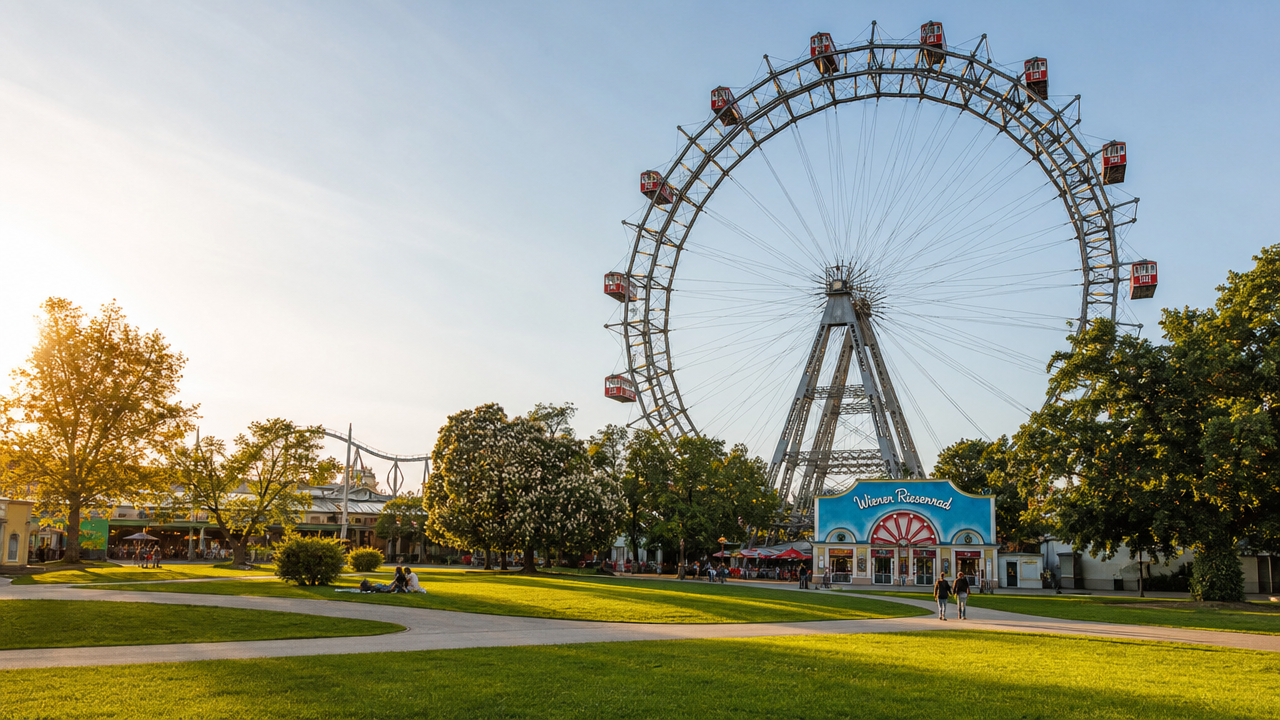
15 min transit
This expansive public park features the iconic Giant Ferris Wheel and offers a peaceful setting before your evening dinner cruise.
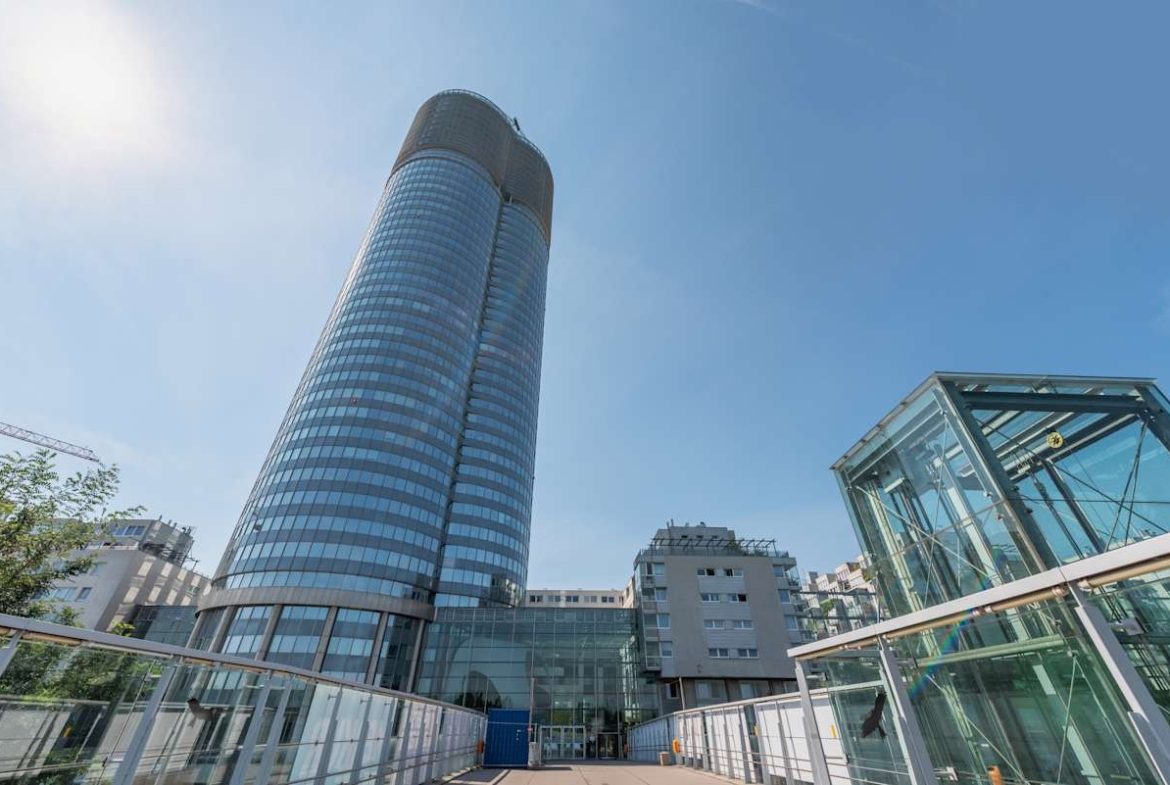
2 min walk
Located directly adjacent to the terminal area, this landmark provides a clear reference point and serves as a modern architectural focal point of the district.
Everything you need to know about vienna river cruise port terminal
The facility is located at Handelskai 265, 1020 Vienna, Austria, along the Danube riverbanks. This hub serves as the primary docking area for various river vessels navigating the waterway.
There is 0 EUR fee for public entry to the terminal area. Please note that access to specific cruise vessels depends entirely on your personal ticket status.
The terminal maintains a schedule of 00:00–23:59 every day of the week. This ensures constant availability for transit passengers throughout the year.
The best arrival window is 09:00–17:00, which is optimal for ferry services, visitor center operations, and connecting public transit. Visiting during these hours provides the smoothest logistics for your journey.
Boarding procedures vary by operator; you should head to the specific pier assigned to your ship once you arrive at the terminal site. Always have your digital or printed booking confirmation ready for inspection by the crew.
The site provides a central point for river transit, including access to visitor services and nearby public transport connections. For specific vessel amenities, please consult the details provided by your cruise operator.
Yes, the terminal is accessible 24 hours a day, seven days a week, including Saturdays and Sundays. This constant accessibility supports the busy schedule of international riverboats.